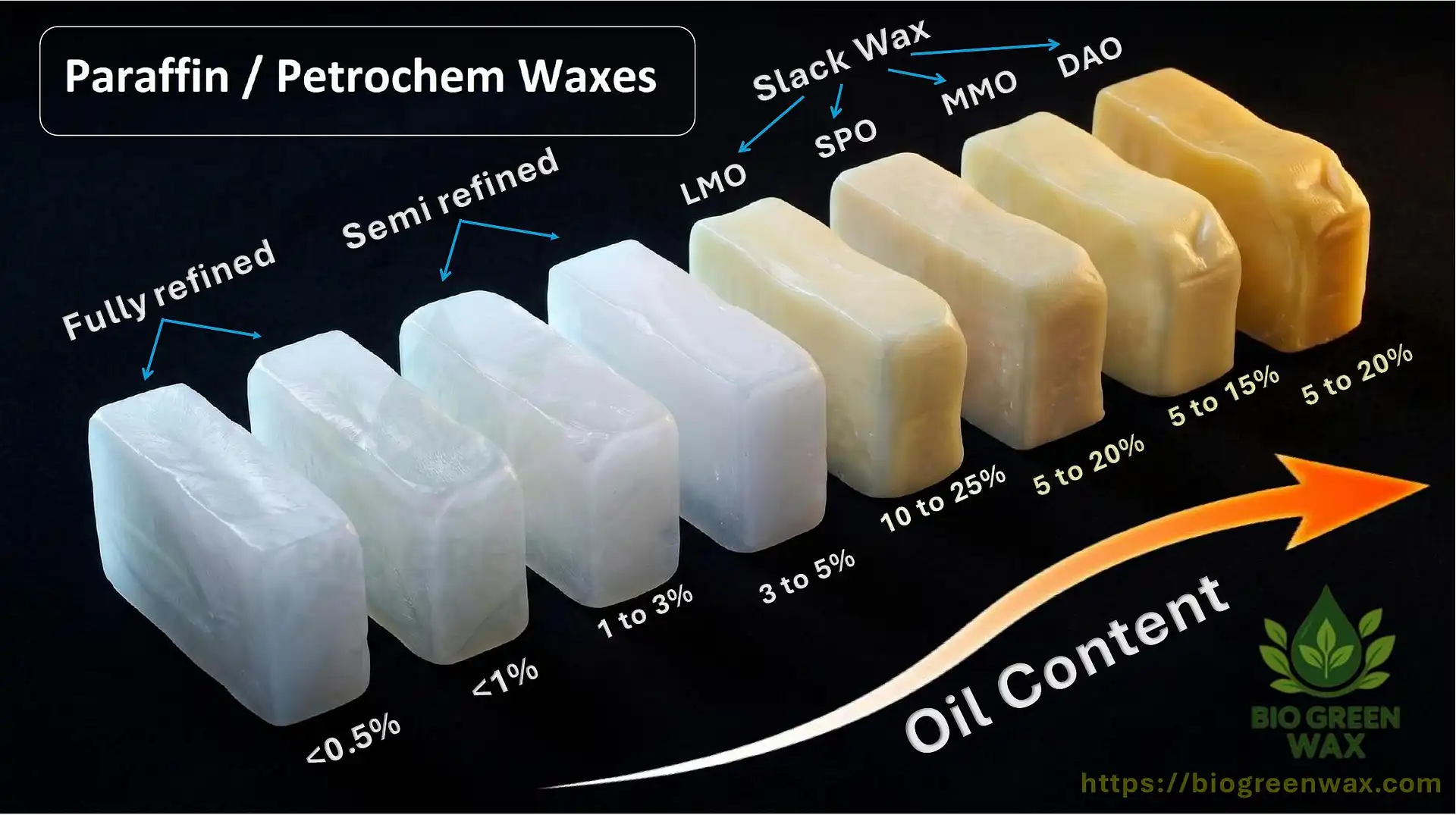
شمع البترول هو مصنوع خلال عملية تكرير النفط الخام، خاصة من محسّنات الزيت. يتضمن عملية الإنتاج فصل المكونات الشمعية، والتي يتم معالجتها بعد ذلك إلى درجات مختلفة وفقًا لمحتوى الزيت ونقاوته ومتطلبات التطبيق.
1. أنواع شمع البترول
أ. شمع السلاك (المادة الخام / المادة الأولية)
شمع السلاك هو أقل forme منفَّة وتخدِّم كالمادة الخام للأشماء الأخرى. وهو يحتوي على نسبة عالية من الزيت المتبقي، وعادة ما تتراوح من 5٪ إلى 30٪ أو أكثر، مما يجعله أكثر ليونة ومرونة.
يبدو أصفر إلى بني وقد يعطِّر
درجة انصهار منخفضة وبلاستيكية أعلى
موفَّر التكلفة ومتوفر على نطاق واسع في التطبيقات الصناعية
الاستخدامات الشائعة: المطاط والتنظيف والماء وكمكون مزيج
نادرًا ما يتم استخدامه 직접ًا في التطبيقات الفوقية النقية ولكنه ضروري في سلسلة القيمة كمواد بداية.
ب. شمع البارافين شبه المُنقَّح
هذا هو المنتج المتوسط الذي يتم الحصول عليه بعد تنقية جزئية (إزالة الزيت) لشمع السلاك. لا تزال تحتوي على بعض الزيت، وعادة ما يكون حول 1-3٪، مما يُمنِحها توازنًا بين الأداء والتكلفة.
الخصائص الرئيسية:
نقاء معتدل
رائحة و لون خفيف
مرونة أفضل من شمع البارافين المُنقَّح بالكامل
أكثر اقتصادية من الدرجات عالية النقاء
التطبيقات تشمل:
الشموع العامة
التغليف والطلاءات
مواد لاصقة وتحجيم اللوحات
يستخدم على نطاق واسع حيث تكون كفاءة التكلفةสำคَة ولكن لا تتطلب 纯度 فائقة.
ج. شمع البارافين المُنقَّح بالكامل
هذا هو أعلى niveau من النقاء، يتم إنتاجه من خلال تنقية 추가 وإزالة hầu hết الزيت (عادة أقل من 0.5٪).
الميزات الرئيسية:
أبيض، خالي من الرائحة، ونظيف
درجة انصهار ثابتة والأداء
استقرار كيميائي عالٍ
التطبيقات:
تغليف الأطعمة
الأدوية
العناية الصحية
شموع فاخرة
يُفضل هذا الدرج عندما تكون الجودة والسلامة والاتساق حرجة.
2. الفروق الرئيسية بين الدرجات
الخاصية شمع السلاك شبه منقَّح منقَّح بالكامل
محتوى الزيت مرتفع (5-30٪+) متوسط (1-3٪) منخفض جدا (أقل من 0.5٪)
اللون والرائحة غامق، رائحة ملحوظة لون/رائحة خفيفة أبيض، خالي من الرائحة
نقاء منخفض متوسط مرتفع
التكلفة الأقل متوسط الأعلى
الاستخدام صناعي /مواد أولية 一般ية أطعمة، أدوية، فاخرة
3. منظور السلسلة الإمدادية
السلسلة الإمدادية لشمع البترول هو مبني حول التكرير التدريجي:
تكرير النفط الخام → توليد شمع السلاك
إزالة الزيت والمعالجة → شمع شبه منقَّح
التكرير المتقدم → شمع منقَّح بالكامل
شمع السلاك يعمل كأساس لصناعة الشمع بأكملها، مما يؤثر على:
جودة المنتج النهائي
تكلفة الإنتاج
التوافر في الأسواق العالمية
يختار المصنعون مصادر المواد الخام وعمليات التكرير بعناية لتوزان التكلفة والأداء ومتطلبات الاستخدام النهائي.
4. الأهمية في التجارة العالمية
يتم تداول شمع البترول على مستوى العالم بكميات كبيرة
تعتمد الأسعار على اتجاهات النفط الخام وسعة التكرير والطلب الإقليمي
تلعب آسيا (特别 جنوب شرق آسيا) دورًا رئيسيًا في الإنتاج والتصدير
يختار المشترون الدرجات بناءً على احتياجات التطبيق (صناعي مقابل غذائي)
5. النقاط الرئيسية
شمع البترول يتم تصنيفه بشكل رئيسي حسب درجة التكرير ومحتوى الزيت
شمع السلاك → خام، زيت عالٍ، منخفض التكلفة
شمع شبه منقَّح → أداء متوازن وسعر
شمع منقَّح بالكامل → نقاء عالٍ، تطبيقات فاخرة
اختيار الدرجة الصحيحة يعتمد على الاستخدام النهائي وحساسية التكلفة ومتطلبات الجودة