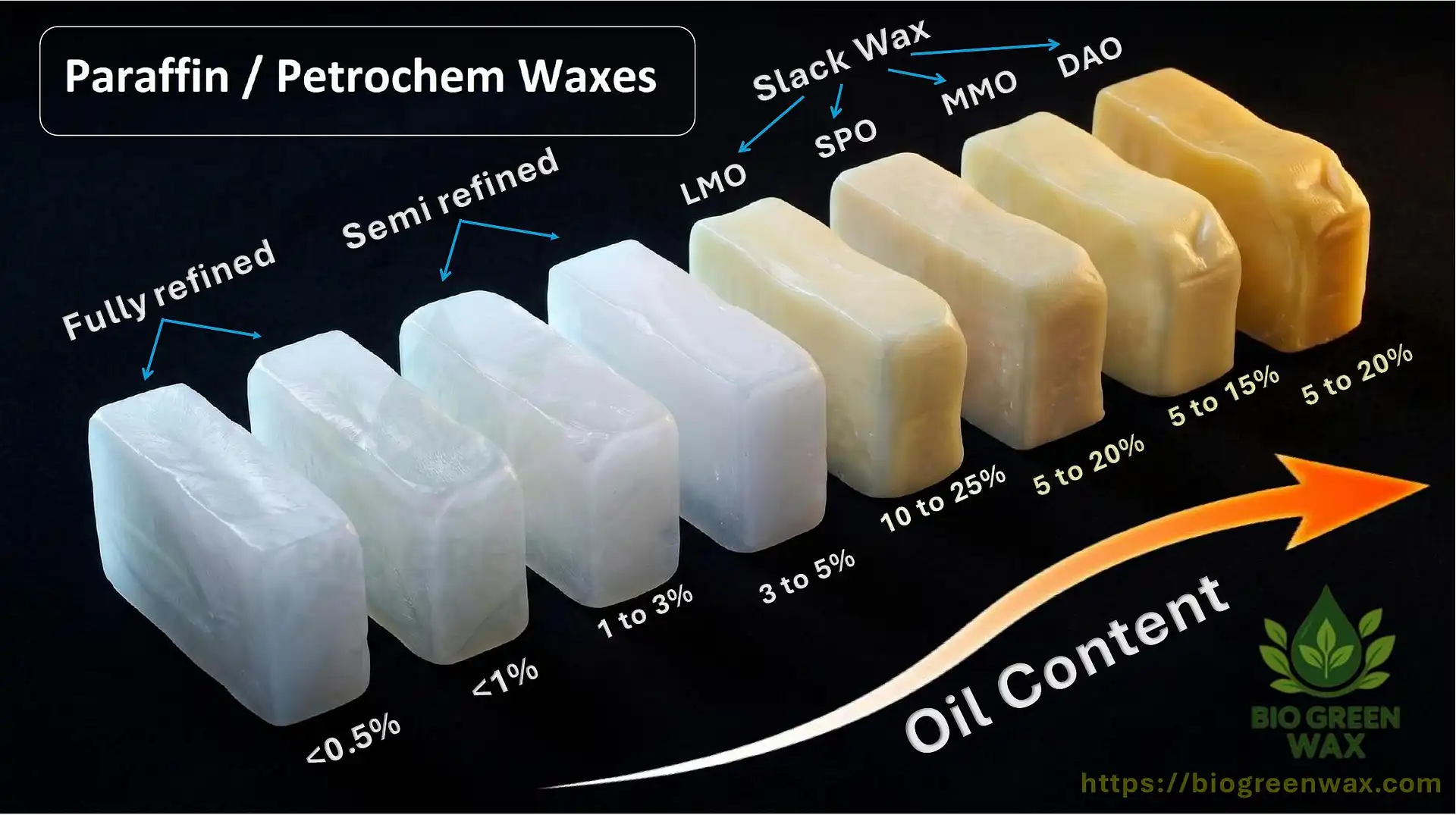
ปิโตรเลียมวैकซ์ถูกแยกออกมาในช่วงการแปรรูปน้ำมันดิบ โดยเฉพาะจากส่วนประกอบของน้ำมันหล่อลื่น การผลิตเกี่ยวข้องกับการแยกส่วนประกอบที่เป็นวัสดุคล้ายขี้ผึ้ง ซึ่งจากนั้นจะถูกแปรรูปต่อไปเป็นเกรดต่างๆ ตามความต้องการของปริมาณน้ำมัน ความบริสุทธิ์ และการใช้งาน
1. ประเภทของปิโตรเลียมวैकซ์
ก. สลักวैकซ์ (วัสดุฐาน / วัสดุดิบ)
สลักวัคซ์เป็นรูปแบบที่ไม่ได้รับการแปรรูปมากที่สุด และทำหน้าที่เป็นวัสดุดิบหลักสำหรับวัสดุวัคซ์อื่นๆ มันประกอบด้วยเปอร์เซ็นต์น้ำมันที่เหลือค่อนข้างสูง โดยทั่วไปในช่วงตั้งแต่ 5% ถึง 30% หรือมากกว่า ทำให้มัน mềmและยืดหยุ่นได้มากกว่า
มีลักษณะเป็นสีเหลืองถึงสีน้ำตาลและมีกลิ่นที่ชัดเจน
มีจุดหลอมเหลวที่ต่ำกว่าและความยืดหยุ่นที่สูงกว่า
มีค่าใช้จ่ายที่เหมาะสมและใช้กันอย่างแพร่หลายในอุตสาหกรรมต่างๆ
การใช้ทั่วไป: สินค้าจากยาง, สินค้าทำความสะอาด, การกันไม่ให้น้ำเข้า, และเป็นส่วนผสม
มันใช้โดยตรงไม่มากในอุตสาหกรรมที่ต้องการความบริสุทธิ์สูง แต่มีความสำคัญในโซ่คุณค่าเนื่องจากเป็นวัสดุดิบเริ่มต้น
ข. ปาราฟินวैकซ์ที่แปรรูปครึ่งหนึ่ง
เป็นผลิตภัณฑ์ระหว่างที่ได้รับหลังการแปรรูปบางส่วน (การเอาน้ำมันออก) ของสลักวัคซ์ ยังคงมีน้ำมันอยู่เล็กน้อย โดยทั่วไปอยู่ที่ประมาณ 1-3% ซึ่งทำให้มันสมดุลระหว่างประสิทธิภาพและค่าใช้จ่าย
คุณสมบัติหลัก:
ความบริสุทธิ์ปานกลาง
มีกลิ่นและ颜สีเล็กน้อย
มีความยืดหยุ่นดีกว่าวัคซ์ที่แปรรูปสมบูรณ์
มีความคุ้มค่ามากกว่าเกรดที่มีความบริสุทธิ์สูง
การใช้งานรวมถึง:
เทียนทั่วไป
บรรจุภัณฑ์และการเคลือบ
สินค้าจากกาวและกระดาษขนาดใหญ่
ใช้กันอย่างแพร่หลายที่ที่ค่าใช้จ่ายที่มีประสิทธิภาพเป็นสิ่งสำคัญ แต่ความบริสุทธิ์สูงไม่ใช่ปัจจัยสำคัญ
ค. ปาราฟินวัคซ์ที่แปรรูปสมบูรณ์
เป็นเกรดที่มีความบริสุทธิ์สูงสุด ผลิตโดยการแปรรูปและเอาน้ำมันออกเกือบหมด (โดยทั่วไป <0.5%)
คุณสมบัติหลัก:
สีขาว, ไม่มีกลิ่น, และสะอาด
จุดหลอมเหลวและประสิทธิภาพที่มั่นคง
เสถียรภาพทางเคมีสูง
การใช้งาน:
บรรจุภัณฑ์อาหาร
ยาที่ใช้รักษาโรค
เครื่องสำอาง
เทียนระดับพรีเมียม
เกรดนี้เป็นที่นิยมเมื่อคุณภาพ, ความปลอดภัย, และความสม่ำเสมอเป็นสิ่งสำคัญ
2. ความแตกต่างหลักระหว่างเกรด
คุณสมบัติ สลักวัคซ์ ปาราฟินวัคซ์ที่แปรรูปครึ่งหนึ่ง ปาราฟินวัคซ์ที่แปรรูปสมบูรณ์
ปริมาณน้ำมัน สูง (5–30%+) ปานกลาง (1–3%) ต่ำมาก (<0.5%)
สีและกลิ่น สีเข้ม, กลิ่นชัดเจน สีและกลิ่นเล็กน้อย สีขาว, ไม่มีกลิ่น
ความบริสุทธิ์ ต่ำ ปานกลาง สูง
ค่าใช้จ่าย ต่ำที่สุด ปานกลาง สูงสุด
การใช้งาน อุตสาหกรรม / วัสดุดิบ การใช้ทั่วไป อาหาร, ยา, เทียนระดับพรีเมียม
3. มุมมองของโซ่คุณค่า
โซ่คุณค่าของปิโตรเลียมวัคซ์ประกอบด้วยการแปรรูปที่ค่อยเป็นค่อยไป:
การแปรรูปน้ำมันดิบ → การสร้างสลักวัคซ์
การเอาน้ำมันออกและการรักษา → ปาราฟินวัคซ์ที่แปรรูปครึ่งหนึ่ง
การแปรรูปขั้นสูง → ปาราฟินวัคซ์ที่แปรรูปสมบูรณ์
สลักวัคซ์ทำหน้าที่เป็นพื้นฐานของอุตสาหกรรมวัคซ์ทั้งหมด ซึ่งมีอิทธิพลต่อ:
คุณภาพของผลิตภัณฑ์สุดท้าย
ต้นทุนการผลิต
ความพร้อมในตลาดโลก
ผู้ผลิตเลือกวัสดุดิบและกระบวนการแปรรูปอย่างรอบคอบเพื่อรักษาสมดุลระหว่างค่าใช้จ่าย, ประสิทธิภาพ, และความต้องการของผลิตภัณฑ์สุดท้าย
4. ความสำคัญในพาณิชย์โลก
ปิโตรเลียมวัคซ์ถูกซื้อขายทั่วโลกในปริมาณมาก
ราคาขึ้นอยู่กับแนวโน้มของน้ำมันดิบ, ความสามารถในการแปรรูป, และความต้องการในภูมิภาค
เอเชีย (โดยเฉพาะเอเชียตะวันออกเฉียงใต้) มีบทบาทสำคัญในการผลิตและส่งออก
ผู้ซื้อเลือกระดับตามความต้องการของการใช้งาน (อุตสาหกรรมเทียบกับอาหาร)
5. ข้อสรุปสำคัญ
ปิโตรเลียมวัคซ์ถูกแบ่งออกเป็นหลักโดยระดับการแปรรูปและปริมาณน้ำมัน
สลักวัคซ์ → วัสดุดิบ, มีน้ำมันสูง, ต้นทุนต่ำ
ปาราฟินวัคซ์ที่แปรรูปครึ่งหนึ่ง → สมดุลของประสิทธิภาพและราคาที่เหมาะสม
ปาราฟินวัคซ์ที่แปรรูปสมบูรณ์ → ความบริสุทธิ์สูง, การใช้งานระดับพรีเมียม
การ seç เกรดที่เหมาะสมขึ้นอยู่กับการใช้งานสุดท้าย, ความอ่อนไหวต่อค่าใช้จ่าย, และความต้องการคุณภาพ