Palm Oil
About This Product
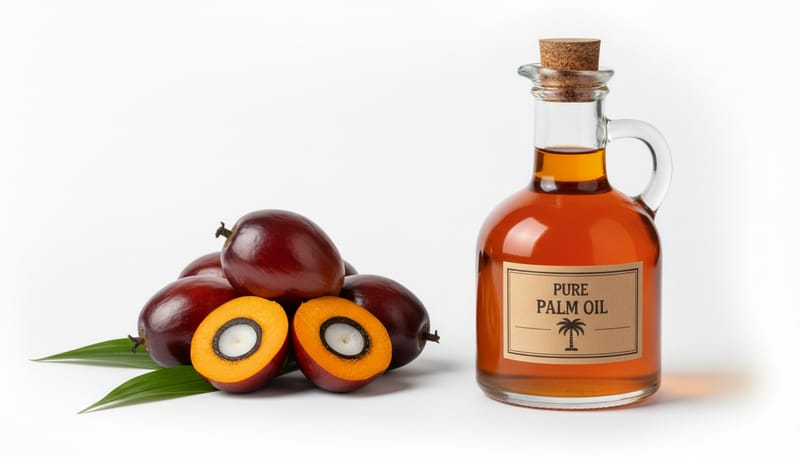
Palm Oil, derived from the fruit of the oil palm (Scientific name: Elaeis guineensis), is one of the world's most widely used edible oils. Extracted through pressing and refining, it yields a versatile, stable oil rich in tocotrienols (a form of vitamin E), carotenoids, and balanced saturated and unsaturated fats that provide energy and support nutrition. Accounting for over 35% of the global edible oils market, palm oil is a cornerstone of modern food production—used in cooking, frying, and baking, as well as in packaged foods, confectionery, and margarine. Beyond the kitchen, it plays a vital role in cosmetics, soaps, detergents, pharmaceuticals, and biofuels. First cultivated in West Africa and introduced to Southeast Asia in the 19th century, palm oil has grown into a global staple thanks to its high yield, versatility, and long shelf life. Interesting fact: palm oil is naturally reddish due to its beta‑carotene content, though refined versions are clear and neutral in taste.
Applications
Available Specifications
Indicative price: GBP 1.00
Prices change with market supply and demand. Contact our sales team for the latest quotation.