Our Products
Explore our comprehensive range of premium edible oils, plant-based waxes, and industrial petrochemical waxes.
Showing 101–120 of 131 products

Soap Noodles 80:20 (TFM + Glycerine 72% min)
An 80:20 soap noodle set at a lower fatty-matter level: TFM and glycerine summing to at least 72%, with 6–9% glycerine and up to 20% moisture. The noodles are yellowish, contain a chelating agent and have a titre no higher than 46 °C.

Soap Noodles 80:20 (TFM + Glycerine 78% min)
Yellowish soap noodles from an 80:20 blend of palm oil and palm kernel oil, rated at a combined total fatty matter and glycerine content of 78% min, with glycerine at 6–9%. Moisture is limited to 16% and the titre to 46 °C.

Soap Noodles 90:10 (TFM + Glycerine 72% min)
Soap noodles on a 90:10 oil blend, where fatty matter and glycerine together reach 72% min and glycerine is 6–9%. The titre is held within 44–46 °C and moisture may reach 22%, giving a yellowish base for laundry, household and economy bars.

Palm Shortenings(Low melting point)
Low melting point palm shortening is supplied at 40 to 42 or 42 to 44 degrees Celsius. The softer solid fat profile is what lets it cream with sugar and hold air, which is what sets the crumb structure of a cake.

PFAD (Palm Fatty Acid Distillate)
PFAD is the condensate collected under vacuum when palm oil is deodorised during refining. At 85 to 95 percent free fatty acids it is a cheap feedstock for soap, candles and fatty acid recovery, and a source of natural vitamin E.

Glycerine
Glycerine (CAS 56-81-5, INCI Glycerin) is propane-1,2,3-triol, the sweet, syrupy co-product of soap making and fat splitting. Supplied crude at around 80 percent or refined to 99.5 percent, it is the most used humectant in personal care.

Palm Oil
Palm Oil, derived from the fruit of the oil palm (Elaeis guineensis), is one of the world's most widely used edible oils. Rich in tocotrienols, carotenoids, and balanced fats, it is essential in cooking, packaged foods, cosmetics, soaps, pharmaceuticals, and biofuels.

Sunflower Oil
Sunflower Oil, derived from sunflower seeds (Helianthus annuus), is a pure, versatile vegetable oil rich in heart-friendly linoleic and oleic acids plus antioxidant vitamin E. Trusted worldwide for frying, baking, cosmetics, pharmaceuticals, and biodiesel applications.

Coconut Oil
Coconut Oil, derived from mature coconut kernels (Cocos nucifera), is a natural, versatile oil rich in medium-chain triglycerides (MCTs), lauric acid, and antioxidants. Widely used for cooking, cosmetics, hair care, pharmaceuticals, and industrial applications like soap making.

Soya Bean Oil
Soybean Oil, derived from soybean seeds (Glycine max), is one of the most widely consumed vegetable oils worldwide. Rich in polyunsaturated fatty acids, omega-3s, and vitamin E, it is a staple in cooking, processed foods, margarine, biodiesel, inks, and lubricants.

Rapeseed Oil
Rapeseed Oil, derived from rapeseed seeds (Scientific name: Brassica napus), is a light, neutral vegetable oil extracted by pressing and refining. Modern “canola” varieties were developed to reduce erucic acid and glucosinolates, making it safe and nutritious.

Olive Oil
Olive oil (CAS 8001-25-0, INCI Olea Europaea Fruit Oil) is pressed from the fruit of Olea europaea. In soap and cosmetic manufacture its high oleic content gives a mild, conditioning bar and a rich, slow-spreading emollient film.

Castor Oil
Castor oil (CAS 8001-79-4, INCI Ricinus Communis Seed Oil) is the raw material from which castor wax is made, and a cosmetic ingredient in its own right. Its ricinoleic acid content gives it unusual viscosity, polarity and gloss.

Palm Kernel Olein
Palm kernel olein is the liquid fraction left when palm kernel stearin is crystallised out. With a cloud point of 8 to 12 degrees Celsius it stays pourable at ambient temperature, which makes it the lauric choice for liquid soaps and lotions.

Palm Olein
Palm olein is the liquid fraction of palm oil, separated by controlled crystallisation and specified by cloud point. Its low polyunsaturate content is why it resists breakdown under prolonged heat better than any other commodity liquid oil.

RBD Palm Olein IV 57
Refined, bleached and deodorised palm olein graded at an iodine value of 57.0–57.9, with a cloud point of 8.8 °C maximum and a slip melting point of 22 °C maximum, for cooking, frying and sautéing.

RBD Palm Olein IV 58
Palm olein with an iodine value of 58.0–58.9 that clouds at 8 °C or below and has a slip melting point of 21 °C maximum. Refining, bleaching and deodorising precede fractionation, and its data sheet names frying, cooking and sautéing as its uses.

RBD Palm Olein IV 60
Palm olein of iodine value 60.0–60.9, held to a slip melting point of 18 °C maximum and Lovibond colour of 2.2 R maximum. An anti-crystalliser can be added on request; the clear, yellowish oil is meant for cooking, frying and sautéing.

Palm Kernel Oil
Palm kernel oil is pressed from the seed of the oil palm fruit, not the pulp. In soap manufacture its lauric content is what produces instant, copious lather, and it is the base from which cocoa butter substitutes are made.
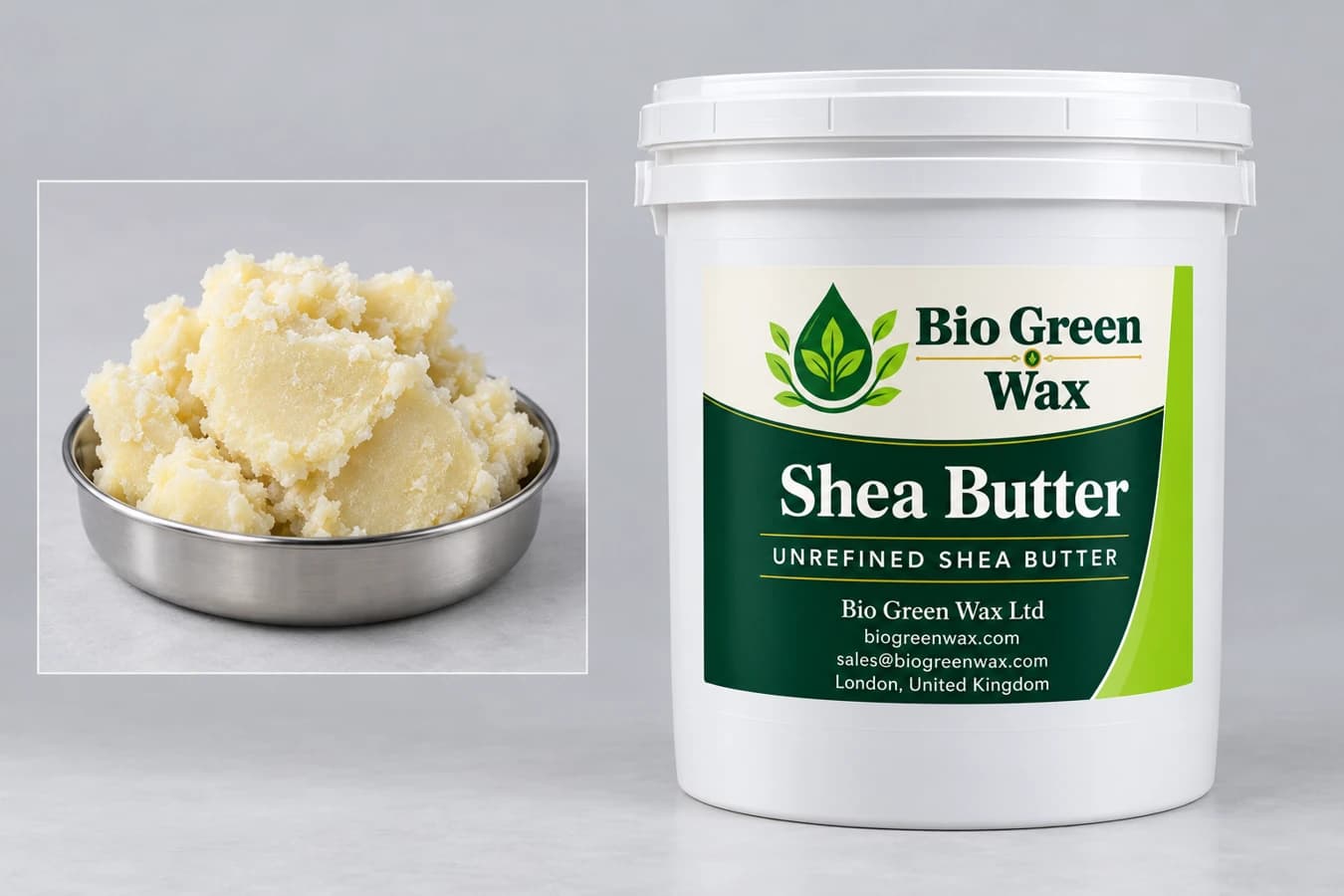
Shea Butter
Unrefined shea butter for body butters, lip balms, lotion bars and massage candles: a soft, skin-melting butter that pairs with beeswax and plant waxes to set the texture of a stick or bar.