Our Products
Explore our comprehensive range of premium edible oils, plant-based waxes, and industrial petrochemical waxes.
Showing 61–78 of 78 products

Palm Stearin
Palm stearin is the hard fraction of palm oil, rich in palmitic acid with an iodine value typically below 48. In candle and soap manufacture it is the cheapest bulk source of the saturated C16 chains that give hardness and opacity.

Palm Shortenings(high melting point)
High melting point palm shortening is a texturised blend of palm stearin and palm oil fractions. Its high solid fat content at elevated temperature is what lets laminated pastry and biscuits hold structure through a warm bakery and the oven.

Palm Stearic Acid
Palm Stearic Acid is a saturated fatty acid (C₁₈H₃₆O₂) derived from palm oil through hydrolysis and fractionation. It appears as a white, waxy solid with a mild odor and is one of the most common fatty acids used in industrial and consumer products.

Palm Kernel Fatty Acid Distillate (PKFAD)
Palm Kernel Fatty Acid Distillate (PKFAD) is a by-product of palm kernel oil refining (Elaeis guineensis), obtained during the deodorization stage. It is rich in lauric and myristic acids, along with minor amounts of oleic and palmitic acids, tocopherols, and sterols.

Soap Noodles
Soap Noodles are semi-finished soap products made by saponifying vegetable oils or animal fats with sodium hydroxide (lye). They come in small, pellet-like shapes and serve as the base material for manufacturing bar soaps.

Palm Shortenings(Low melting point)
Low melting point palm shortening is supplied at 40 to 42 or 42 to 44 degrees Celsius. The softer solid fat profile is what lets it cream with sugar and hold air, which is what sets the crumb structure of a cake.

PFAD (Palm Fatty Acid Distillate)
PFAD is the condensate collected under vacuum when palm oil is deodorised during refining. At 85 to 95 percent free fatty acids it is a cheap feedstock for soap, candles and fatty acid recovery, and a source of natural vitamin E.

Glycerine
Glycerine (CAS 56-81-5, INCI Glycerin) is propane-1,2,3-triol, the sweet, syrupy co-product of soap making and fat splitting. Supplied crude at around 80 percent or refined to 99.5 percent, it is the most used humectant in personal care.

Palm Oil
Palm Oil, derived from the fruit of the oil palm (Elaeis guineensis), is one of the world's most widely used edible oils. Rich in tocotrienols, carotenoids, and balanced fats, it is essential in cooking, packaged foods, cosmetics, soaps, pharmaceuticals, and biofuels.

Sunflower Oil
Sunflower Oil, derived from sunflower seeds (Helianthus annuus), is a pure, versatile vegetable oil rich in heart-friendly linoleic and oleic acids plus antioxidant vitamin E. Trusted worldwide for frying, baking, cosmetics, pharmaceuticals, and biodiesel applications.

Coconut Oil
Coconut Oil, derived from mature coconut kernels (Cocos nucifera), is a natural, versatile oil rich in medium-chain triglycerides (MCTs), lauric acid, and antioxidants. Widely used for cooking, cosmetics, hair care, pharmaceuticals, and industrial applications like soap making.

Soya Bean Oil
Soybean Oil, derived from soybean seeds (Glycine max), is one of the most widely consumed vegetable oils worldwide. Rich in polyunsaturated fatty acids, omega-3s, and vitamin E, it is a staple in cooking, processed foods, margarine, biodiesel, inks, and lubricants.

Rapeseed Oil
Rapeseed Oil, derived from rapeseed seeds (Scientific name: Brassica napus), is a light, neutral vegetable oil extracted by pressing and refining. Modern “canola” varieties were developed to reduce erucic acid and glucosinolates, making it safe and nutritious.
Olive Oil
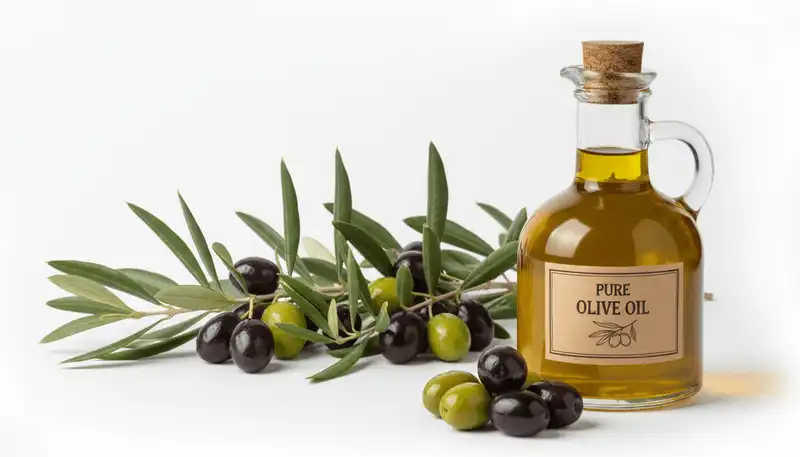
Olive oil (CAS 8001-25-0, INCI Olea Europaea Fruit Oil) is pressed from the fruit of Olea europaea. In soap and cosmetic manufacture its high oleic content gives a mild, conditioning bar and a rich, slow-spreading emollient film.

Castor Oil
Castor oil (CAS 8001-79-4, INCI Ricinus Communis Seed Oil) is the raw material from which castor wax is made, and a cosmetic ingredient in its own right. Its ricinoleic acid content gives it unusual viscosity, polarity and gloss.
Palm Kernel Olein
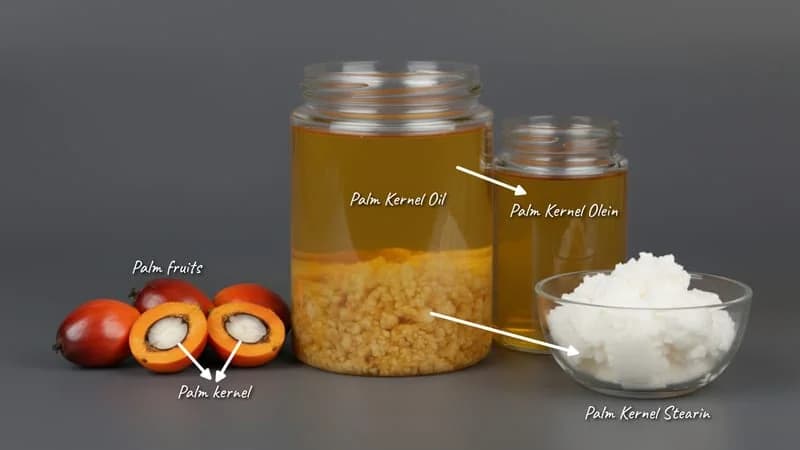
Palm kernel olein is the liquid fraction left when palm kernel stearin is crystallised out. With a cloud point of 8 to 12 degrees Celsius it stays pourable at ambient temperature, which makes it the lauric choice for liquid soaps and lotions.

Palm Olein
Palm olein is the liquid fraction of palm oil, separated by controlled crystallisation and specified by cloud point. Its low polyunsaturate content is why it resists breakdown under prolonged heat better than any other commodity liquid oil.

Palm Kernel Oil
Palm kernel oil is pressed from the seed of the oil palm fruit, not the pulp. In soap manufacture its lauric content is what produces instant, copious lather, and it is the base from which cocoa butter substitutes are made.